
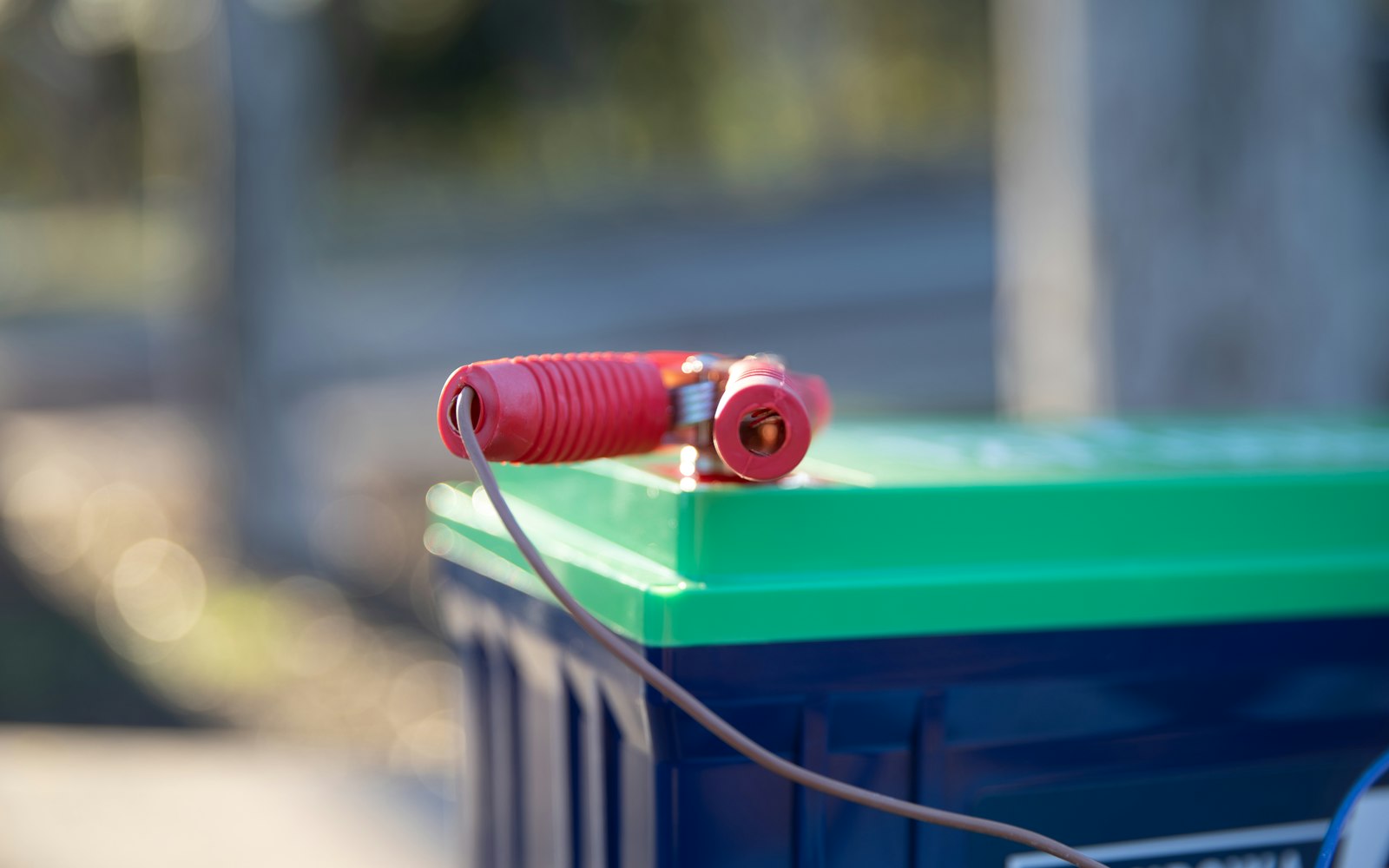
A dead battery is one of the most common reasons we see tow trucks and boost-request calls spike the moment Calgary's temperature drops, and it usually happens without much warning. Here's why cold is so hard on batteries, and how to catch a failing one before it leaves you stranded.
Why cold weather is so hard on batteries
A car battery makes power through a chemical reaction, and that reaction slows down as the temperature drops. At around -18°C, a typical lead-acid battery can lose close to half its cranking power compared to room temperature. At the same time, cold engine oil is thicker and harder to turn over, so your starter is asking for more power right when the battery has the least to give. A battery that was just barely getting the job done in September can fail outright on the first real cold snap.
Warning signs your battery is on its way out
Few batteries fail with zero warning, most give you a few small signs in the days or weeks before. Watch for:
- A slower crank — the engine takes a beat longer to turn over than it used to, especially first thing in the morning
- Dimming headlights or interior lights, particularly when the engine is idling or just started
- A dashboard battery warning light, though not every vehicle will trigger one before a full failure
- Clicking instead of cranking when you turn the key, a sign the battery can't deliver enough current to engage the starter
- A battery older than 3 to 5 years — even one that still starts the car reliably in summer is living on borrowed time once a real cold snap hits
How long a battery should actually last
Most batteries are rated for 3 to 5 years, but Calgary's temperature swings, and the electrical load of remote starters and heated seats, tend to shorten that in practice. If your battery is approaching that age going into fall, it's worth having it load-tested rather than waiting to find out the hard way on a -30°C morning.
What we check
A proper battery test measures how much current the battery can actually deliver under load, not just its resting voltage, which can look fine on a battery that's about to fail. As part of our service and repair visits, we test battery health, inspect the terminals for corrosion, and check that the charging system itself is keeping up, since a healthy alternator matters just as much as the battery it's charging.
If you do get stranded
Keep jumper cables or a portable jump-starter pack in the vehicle through the winter months. When boosting a battery, connect positive to positive first, then negative to a solid unpainted metal point on the dead vehicle's engine block rather than the battery terminal itself, to reduce the risk of sparks near the battery. If the vehicle won't hold a charge after boosting and driving for 15 to 20 minutes, the battery itself likely needs replacing rather than just a charge.
Building it into your winter prep
A battery test takes a few minutes and pairs naturally with the rest of your seasonal prep, alongside a winter tire swap and a fluid check. Catching a weak battery in October, while it's still an easy shop visit, beats discovering it in a parking lot in January.
If you're not sure how old your current battery is or when it was last tested, bring it in and we'll check it while you're in for anything else, it only adds a few minutes to a normal visit.